New 10 AI Prompts for Neon-Lit Rainy Cityscapes at Night
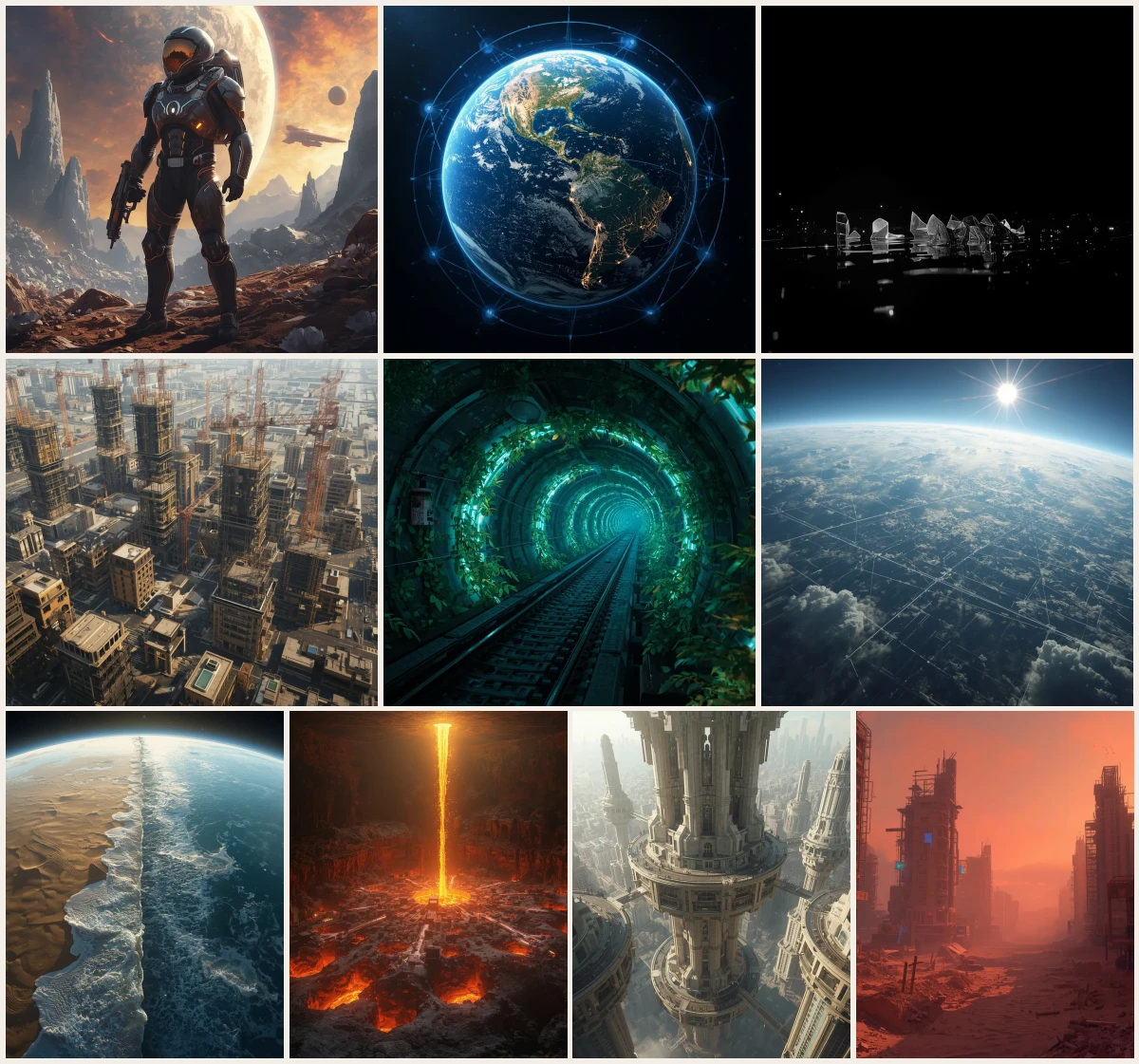
These neon-lit rainy ai prompts are a creator's practical playbook for turning night cityscapes into cinematic, rain-soaked worlds. You get ten ready-to-use directions, from a Galactic Space Explorer Standing on an Alien Planet's Surface to a Post Apocalyptic Neon Desert City Reclaimed By Digital Sand Intelligence Systems, and each one is built around a strong visual idea that survives the jump from text to image. The set leans into reflective streets, wet surfaces and glowing colour, but it also stretches into stranger territory: a neon jungle metro, liquid light architecture, and a planetary respiratory system that cleans the air.
The trick is to treat each prompt as a starting point, not a locked recipe. A neon jungle metro with living tunnel ecosystem needs different lighting language than a cosmic desert ocean hybrid planet where waves become dunes. Likewise, a floating multi gravity architecture field asks for vertical composition, while a magma energy civilization pulls the eye downward into glowing rock. When you match the camera and colour words to the concept, the results stop looking generic and start looking intentional.
Below you will find why these prompts work, how to choose a base photo, the lighting and camera words that matter, a step-by-step workflow, and ways to customise everything for your own style. Keep the list beside you, copy one prompt, and adjust only what you need. The goal is a finished image that feels like a real place caught in the rain at night.
Table of contents 22 sections
- Why these prompts work for neon-lit rainy ai prompts
- Choosing the right base photo
- Lighting, colour and camera words that matter
- Step-by-step workflow from photo to final image
- Customising the prompts for your own style
- Rain-Soaked Prompt Snags and How to Fix Them
- Night Render Tools for Neon Cityscape Work
- Prompt Settings Reference for These Ten Scenes
- Prompt 1: Galactic Space Explorer Standing on an Alien Planet's Surface
- Prompt 2: Unified Planetary Civilization Intelligence System With Fully Connected Global Infrastructure Network
- Prompt 3: Ultra Minimal Black Void With Floating Liquid Light Architecture Fragments
- Prompt 4: Autonomous Mega Construction Swarm Civilization With Self Building Infrastructure System
- Prompt 5: Futuristic Neon Jungle Underground Metro System With Living Tunnel Ecosystem
- Prompt 6: Global Air Purification Atmospheric Mesh With Planetary Respiratory System Network
- Prompt 7: Cosmic Desert Ocean Hybrid Planet With Sand Water Fusion Energy Cycles
- Prompt 8: Deep Earth Magma Energy Civilization With Controlled Thermal Core Extraction System
- Prompt 9: Floating Multi Gravity Architecture Fields With Vertical City Layer Rotation System
- Prompt 10: Post Apocalyptic Neon Desert City Reclaimed By Digital Sand Intelligence Systems
- How to use these prompts
- Pro tips for better results
- Frequently asked questions
- Conclusion
Why these prompts work for neon-lit rainy ai prompts
Each prompt in this set works because it gives the model a clear physical situation, not just a mood. A galactic space explorer standing on an alien planet's surface implies a figure, a ground plane and a horizon, so the composition has somewhere to go. A global air purification atmospheric mesh with a planetary respiratory system network implies scale and structure, which pushes the model toward wide, layered views instead of flat backdrops. When a prompt names a system, a place and a visual behaviour, the model has enough constraints to build something coherent.
The second reason is that every concept here contains built-in contrast. Neon-lit rainy cityscapes at night depend on light against dark, and these prompts supply that contrast in different forms: liquid light architecture fragments floating in a black void, digital sand rewriting ruined buildings, magma glowing beneath a controlled thermal core, or a construction swarm assembling infrastructure while the city sleeps. Contrast gives the eye a path. It also gives you, the creator, a natural place to add rain, reflections and fog without fighting the original idea.
Finally, the prompts are modular. You can keep the subject and swap the setting, or keep the setting and change the scale. A neon jungle metro can become a neon jungle overpass; a cosmic desert ocean hybrid planet can become a coastal megacity at night. That flexibility is why these ten prompts reward repeat use. They are specific enough to look deliberate, but open enough that you can run them five times and get five different images worth keeping.
Choosing the right base photo
If you are working from a base photo, look for strong geometry first. Wet asphalt, glass facades, tunnel entrances, stairwells and bridge undersides all give the model edges to hold onto, which matters when you are asking for neon-lit rainy ai prompts. A flat, evenly lit snapshot gives the model very little to reinterpret. A photo with a clear foreground, middle ground and background, even if it is a phone shot, gives the prompt somewhere to place rain, reflections and glow.
Next, check the light direction. A base photo shot at dusk or under streetlights already contains mixed colour, and that is ideal for a neon jungle metro or a post-apocalyptic desert city reclaimed by digital sand intelligence. If your photo is harsh midday sun, you can still use it, but expect to describe night, rain and artificial colour more forcefully. The model will follow your text, but it works best when the original image is not fighting the new lighting.
Finally, consider what you want to keep. A person, a vehicle, a doorway or a piece of signage can anchor the scene and make the final image feel inhabited. For prompts like the autonomous mega construction swarm civilization, a small human figure or a recognisable object gives scale to the robotic builders. For liquid light architecture in a black void, almost nothing needs to survive from the base photo except the composition. Decide what stays, then let the prompt handle the rest.
Lighting, colour and camera words that matter
Lighting words do the heavy lifting in neon-lit rainy ai prompts. Terms like wet reflections, volumetric haze, rim light and practical neon signage tell the model how light behaves in the scene. For a neon jungle metro, add bioluminescent glow and damp tunnel air. For a magma energy civilization, use ember glow, heat shimmer and deep orange bounce. For a floating multi gravity architecture field, use soft ambient sky light and long vertical shadows. The more precisely you describe where the light comes from, the less the model has to guess.
Colour words should be limited and deliberate. Pick two or three anchors, such as cyan and magenta for a rainy street, or amber and deep red for geothermal extraction, or pale blue and black for liquid light architecture. If you list six colours, the image usually turns muddy. If you name a dominant palette and one accent, the result reads clean. For the cosmic desert ocean hybrid planet, a warm sand tone against cool water blue creates an instant sense of two systems merging.
Camera words control scale and intimacy. Wide-angle lens, low camera angle and deep depth of field suit planetary and infrastructure concepts. 35mm, eye-level and shallow depth of field suit a lone explorer or a street-level metro scene. Add rain streaks, lens droplets and motion blur only when the concept supports it. A controlled thermal core extraction system does not need rain on the lens, but a night cityscape does. Match the camera language to the physical logic of the prompt.
Step-by-step workflow from photo to final image
Start by picking one prompt from the list and reading it twice. Identify the subject, the setting and the visual behaviour it describes. For the global air purification atmospheric mesh, the subject is the network, the setting is the planet, and the behaviour is continuous cleaning. Write those three things in your own words before you touch any tool. This small step stops you from pasting a prompt and hoping, and it makes your edits purposeful.
Next, prepare your base photo. Crop to the composition you want, correct the exposure and remove obvious distractions. You do not need a perfect image, but you do need a clear one. If you are using the autonomous mega construction swarm civilization, a photo with open ground and a few vertical structures gives the swarm something to build around. If you are using liquid light architecture, a dark frame with negative space is enough. Save a copy so you can always return to the original.
Then run the prompt with your base photo and review the first result without judging it. Look for one thing that works and one thing that does not. Adjust the lighting words first, then the colour words, then the camera words. Repeat two or three times. For neon-lit rainy ai prompts, the biggest gains usually come from specifying wet surfaces and reflective ground. Once the image holds together, export at the highest resolution you can and keep your prompt notes for the next run.
Customising the prompts for your own style
Customisation begins with the subject, not the style. If you want a warmer, more human image, keep the setting and replace the system with a person. Turn the atmospheric mesh into a lone technician on a rooftop, or turn the construction swarm into a single robot pausing in the rain. If you want something colder and more abstract, remove the figure entirely and let the infrastructure carry the frame. Both directions work because the original prompt already established a believable world.
You can also shift scale. A floating multi gravity architecture field can be tightened into one street where gravity tilts, or widened into an entire city rotating in layers. The cosmic desert ocean hybrid planet can become a single shoreline where water and sand trade places. Changing scale is one of the fastest ways to make a prompt feel like yours, and it rarely breaks the underlying logic. Just keep the physical behaviour consistent: if dunes dissolve into waves, they should still do that after you zoom in.
Finally, build a small personal vocabulary. Collect five or six lighting phrases, three colour pairs and three camera setups that you like, and reuse them across prompts. This is how you develop a recognisable look while still using neon-lit rainy ai prompts as your foundation. Save your favourite combinations in a note, label them clearly, and treat each new prompt as a variation on a theme rather than a fresh start. Consistency is what turns a set of images into a body of work.
Rain-Soaked Prompt Snags and How to Fix Them
| Issue | What to change |
|---|---|
| The galactic explorer prompt sets a heroic figure on an alien surface but does not specify weather, so the scene can look dry and flat. | Add rain, wet rock and reflective ground to the prompt if you want it to sit inside a neon night set. Otherwise keep it dry and let the alien terrain carry the contrast. |
| The liquid light architecture prompt places fragments in an infinite black void, which can produce empty, unbalanced compositions. | Describe the position and scale of two or three fragments so the void has structure. A single large form plus two small ones usually reads best. |
| The neon jungle metro and the digital sand intelligence prompts both use living, responsive materials, which can blur together if described loosely. | Give each material one clear behaviour: plants grow through walls in the metro, sand rewrites structures in the desert. Keep those behaviours separate in your text. |
| The magma energy civilization prompt pulls the eye downward, but many night cityscape prompts push the camera up toward towers and sky. | Use a low camera angle and a downward light source for the magma scene. If you want sky, keep it minimal and let the glow come from below. |
| The floating multi gravity architecture prompt implies vertical surfaces and rotation, which can confuse a model trained on flat ground planes. | State the gravity direction explicitly and name one vertical street or wall. One clear anchor keeps the rotation readable instead of chaotic. |
Night Render Tools for Neon Cityscape Work
| Tool | Access | Typical realism | Useful here for |
|---|---|---|---|
| Midjourney | Paid | Very high | Strong at cinematic night scenes and wet reflections, which suits neon-lit cityscapes and the explorer prompt equally well. |
| Stable Diffusion | Free | High | Runs locally with image-to-image, so you can feed a base photo and keep the composition while changing the lighting. |
| Adobe Firefly | Free tier | Medium | Good for quick generative fill and colour grading on a base photo before you commit to a full render. |
| Leonardo AI | Free tier | High | Offers style controls and upscaling that help with neon jungle metro and construction swarm scenes. |
| DALL·E | Free tier | Medium | Handles abstract concepts like liquid light architecture and multi gravity fields with fewer physical errors. |
Prompt Settings Reference for These Ten Scenes
Prompt 1Galactic Space Explorer Standing on an Alien Planet's Surface
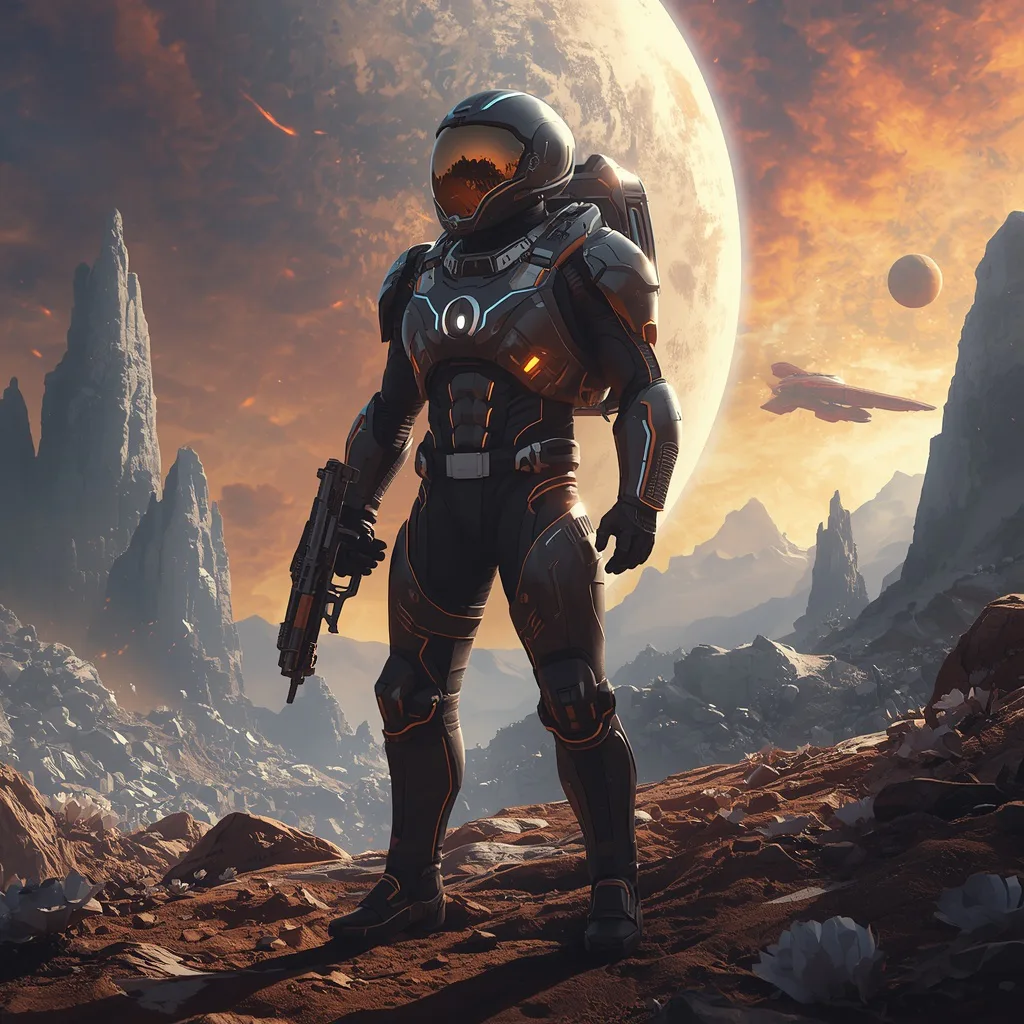
Depict a seasoned galactic space explorer standing heroically on the rugged, alien surface of an exoplanet, rendered in a hyperrealistic cinematic style. The explorer wears an advanced, sleek exosuit with glowing energy conduits and intricate sensor arrays, reflecting the harsh alien sunlight. Their helmet is partially reflective, showing a glimpse of their determined face. In one hand, they hold a futuristic plasma rifle, ready for any challenge. The landscape is dramatic and otherworldly, featuring towering crystalline rock formations, exotic bioluminescent flora, and a breathtaking nebula-filled sky with multiple alien moons visible. A distant, advanced spacecraft is partially visible in the background, hinting at their mission. The lighting is dramatic, casting long shadows and highlighting the textural details of the alien environment and the explorer's gear, emphasizing a sense of awe and adventure.
What this prompt creates
A seasoned explorer in a sleek exosuit with glowing conduits stands heroically on rugged alien terrain. Hyperrealistic cinematic style, harsh sunlight, reflective helmet, plasma rifle ready. Emphasizes determination and advanced tech.
- Best model
- Midjourney
Tips for this prompt
- Change the exosuit color to deep crimson and add a second moon in the sky for a more alien atmosphere.
Prompt 2Unified Planetary Civilization Intelligence System With Fully Connected Global Infrastructure Network
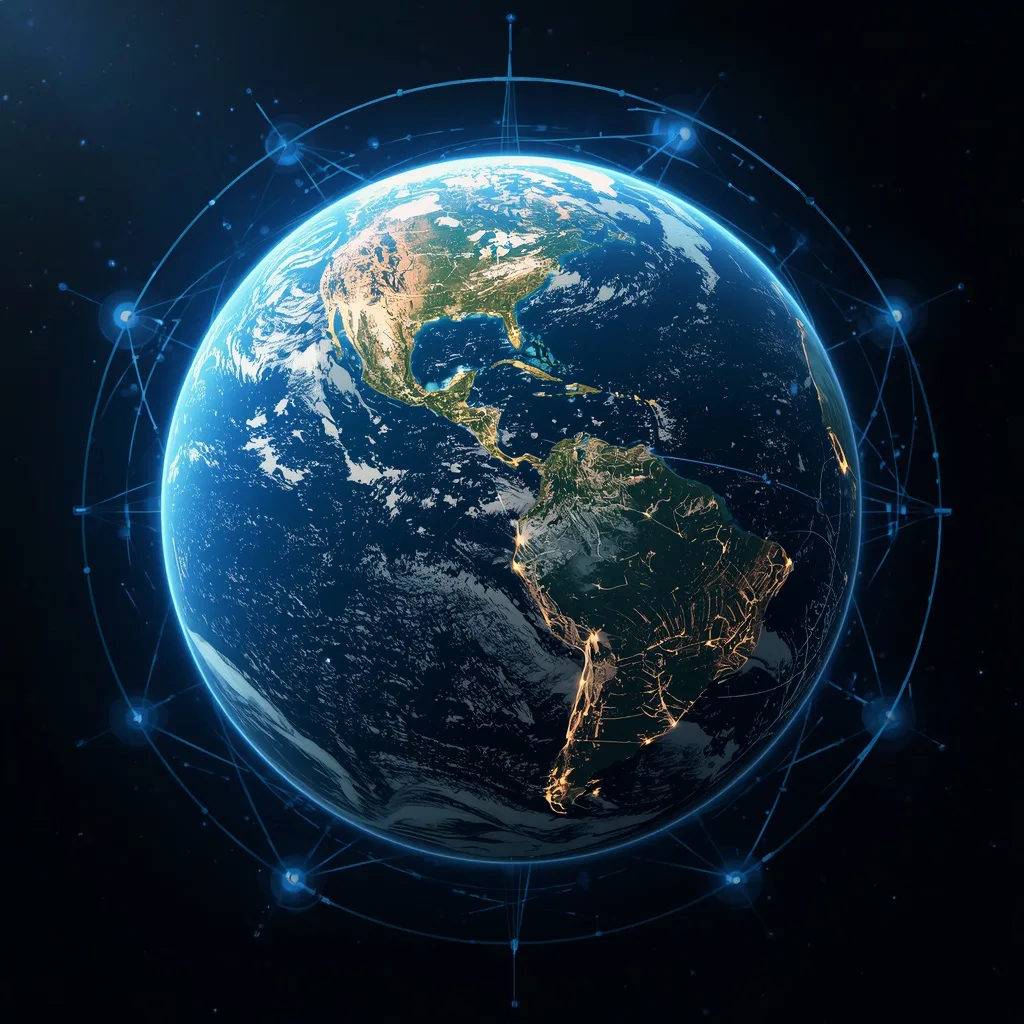
A highly advanced global system where all infrastructure, energy, transportation, communication, and environmental systems are fully interconnected into a unified planetary intelligence network. The system continuously optimizes civilization in real time, balancing resources, stability, and ecological harmony. Earth functions as a single intelligent organism with synchronized global systems operating seamlessly. Ultra realistic 8K visualization showing planetary connectivity, infrastructure intelligence, and civilization-scale system integration.
What this prompt creates
Ultra-realistic 8K visualization of Earth as a single intelligent organism with synchronized global systems. Shows interconnected energy, transport, and communication networks optimizing civilization in real time. Emphasizes seamless planetary harmony.
- Best model
- Flux
Tips for this prompt
- Add glowing data streams connecting major cities to highlight real-time optimization and balance.
Prompt 3Ultra Minimal Black Void With Floating Liquid Light Architecture Fragments
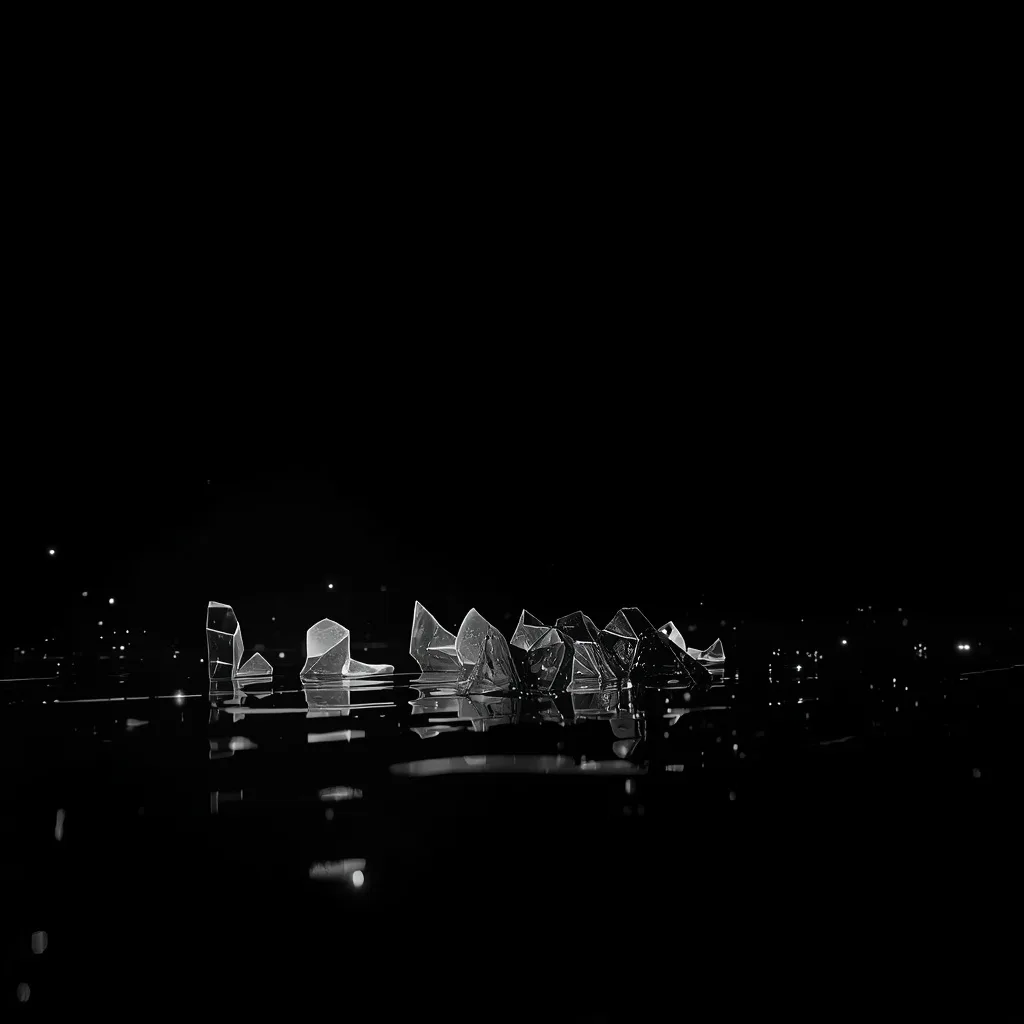
A pure conceptual environment of infinite black void space containing floating fragments of liquid light architecture. Structures slowly form and dissolve without any fixed geometry. Light behaves like a material forming temporary structures in empty space. The scene is minimal, abstract, and cinematic. 8K ultra detail, no text.
What this prompt creates
A pure black void with floating fragments of liquid light forming and dissolving abstract structures. Minimal, cinematic, and 8K ultra-detailed. Light behaves as a material in empty space.
- Best model
- Leonardo AI
Tips for this prompt
- Introduce a subtle color gradient from cyan to magenta in the liquid light for a more dynamic feel.
Prompt 4Autonomous Mega Construction Swarm Civilization With Self Building Infrastructure System
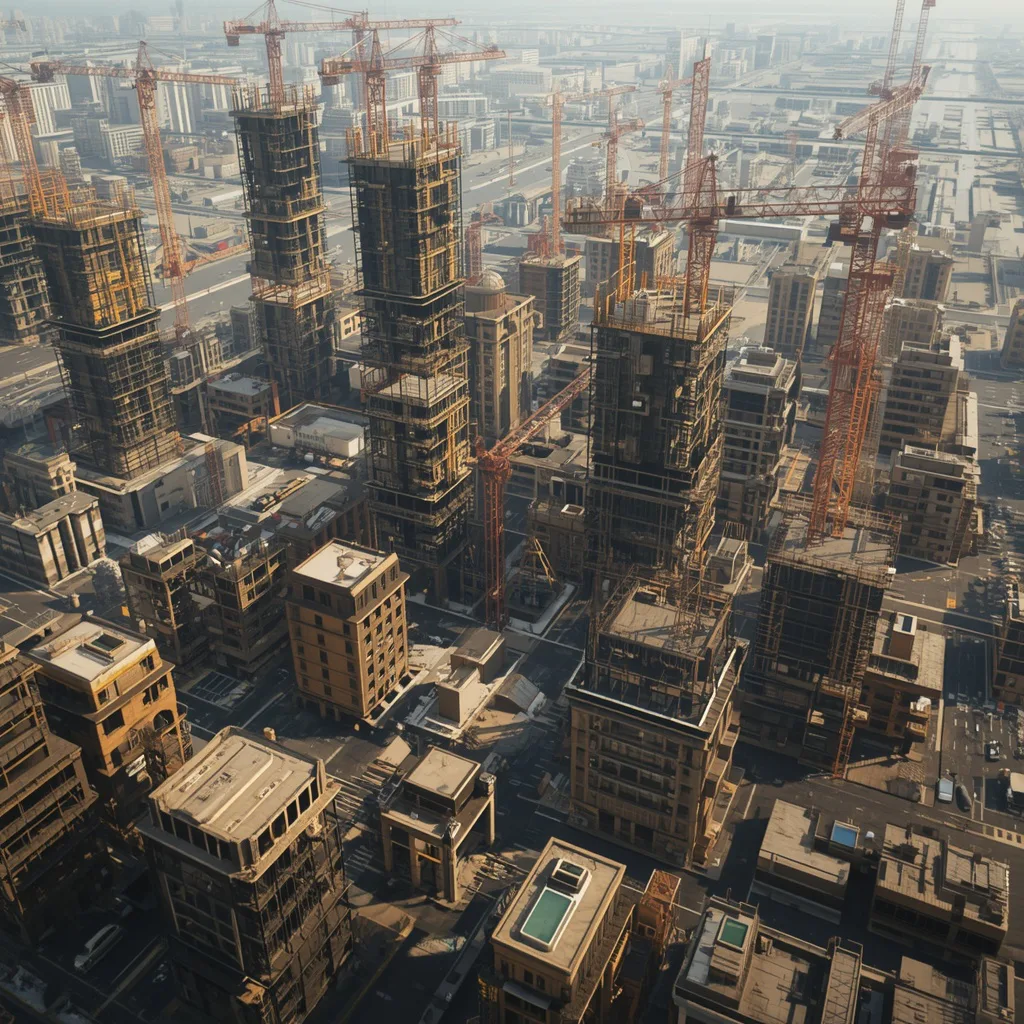
A futuristic construction system where massive robotic swarms autonomously build entire cities and infrastructure systems without human intervention. These coordinated units operate with real-time adaptive intelligence, constructing, repairing, and upgrading structures continuously. The system allows civilization to expand rapidly and efficiently. Construction becomes a living process of constant evolution. Ultra detailed 8K visualization showing robotic systems, structural assembly, and advanced engineering automation.
What this prompt creates
Massive robotic swarms autonomously build and upgrade cities with real-time adaptive intelligence. Ultra-detailed 8K visualization shows continuous construction as a living process. Emphasizes rapid, efficient expansion.
- Best model
- Midjourney
Tips for this prompt
- Focus on a single swarm unit in the foreground to showcase intricate mechanical details and coordination.
Prompt 5Futuristic Neon Jungle Underground Metro System With Living Tunnel Ecosystem
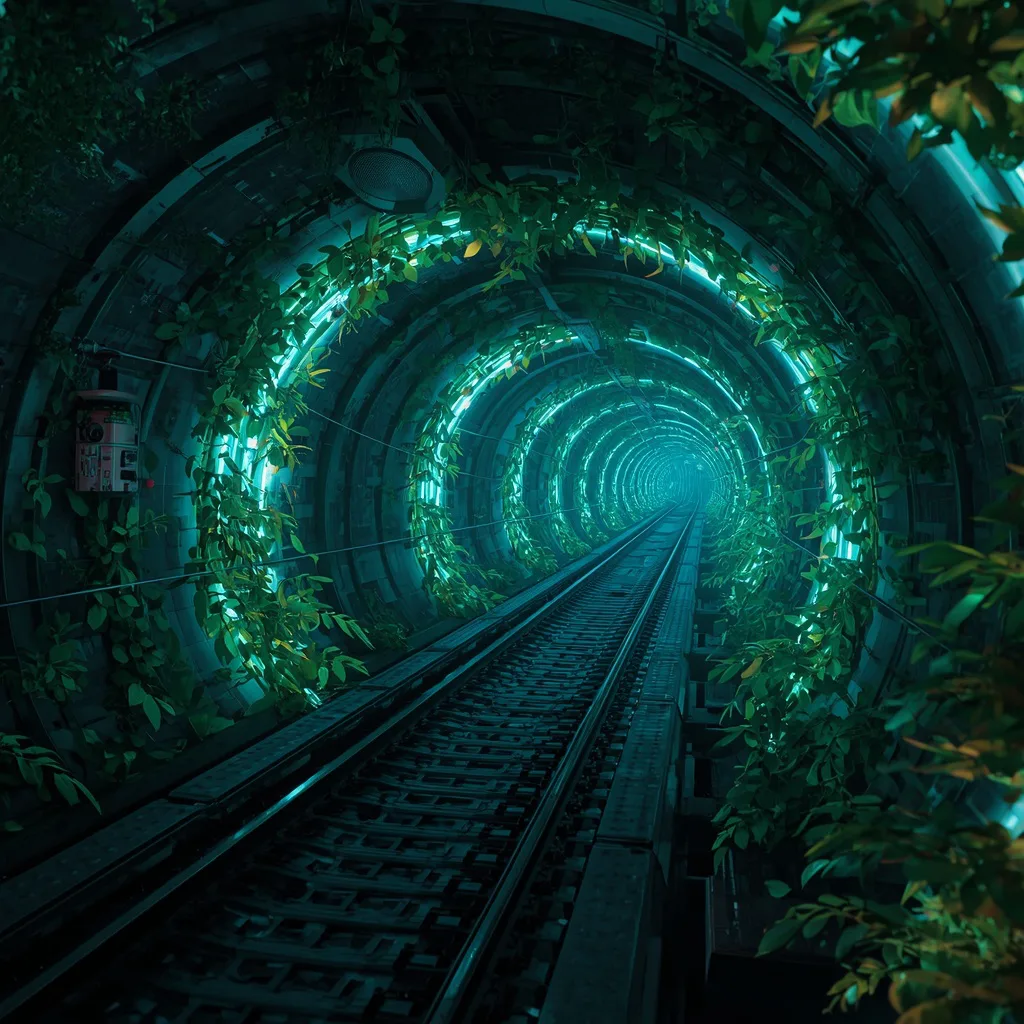
A subterranean metro system running through a neon jungle where tunnels are alive with organic growth and digital energy. Plants grow through walls while trains pass through glowing bio tunnels. The environment blends underground infrastructure with living ecosystem design. Ultra cinematic cyber-natural fusion, 8K, no text.
What this prompt creates
A subterranean metro where tunnels are alive with organic growth and digital energy. Plants grow through walls as trains pass through glowing bio-tunnels. Ultra-cinematic cyber-natural fusion in 8K.
- Best model
- Gemini
Tips for this prompt
- Add bioluminescent creatures perched on vines to enhance the living ecosystem vibe.
Prompt 6Global Air Purification Atmospheric Mesh With Planetary Respiratory System Network
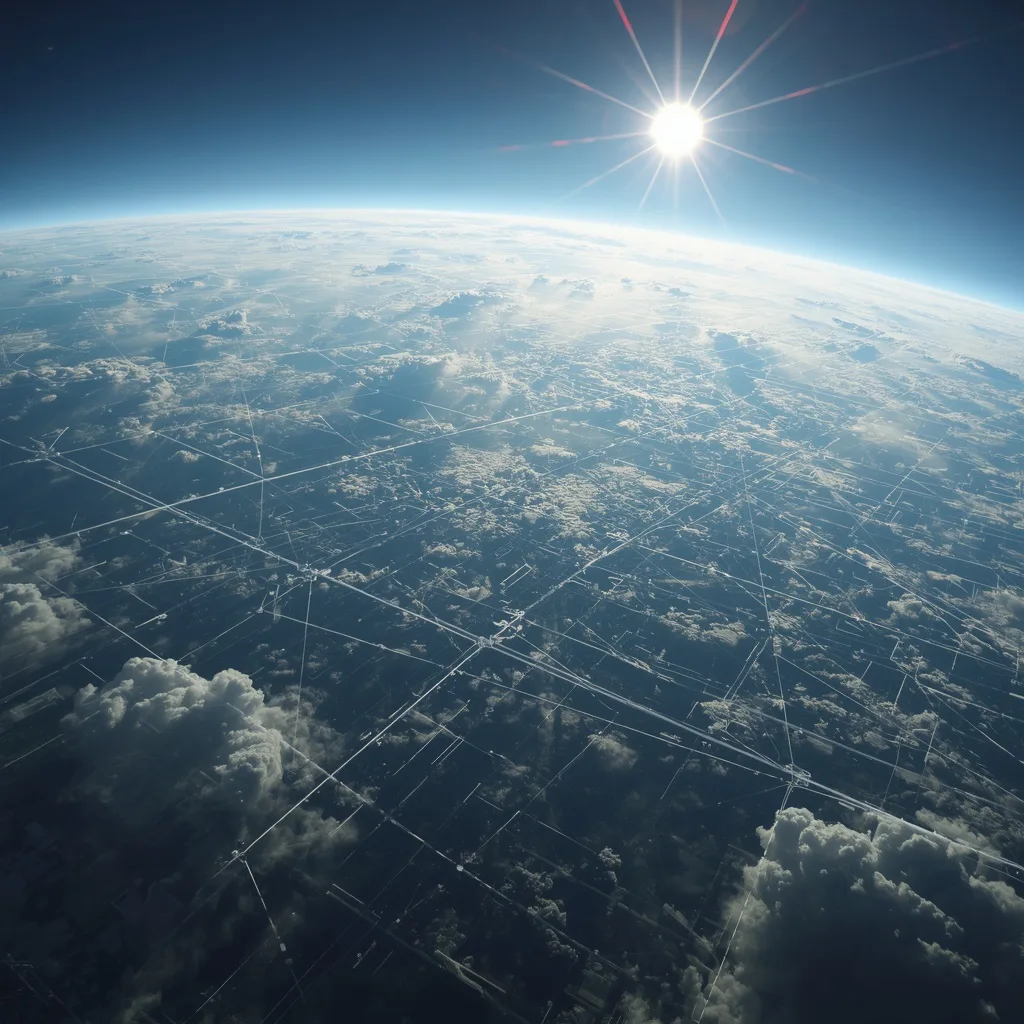
A planetary air purification system that functions like a respiratory system for Earth, continuously cleaning and stabilizing atmospheric composition. Distributed nodes filter pollutants, regulate oxygen levels, and restore environmental balance across global regions. The system operates invisibly within natural atmospheric flows. The sky appears clearer and more stable as the network functions. Ultra realistic 8K visualization showing atmospheric systems, purification networks, and environmental engineering integration.
What this prompt creates
A planetary air purification system visualized as Earth's respiratory network. Distributed nodes filter pollutants and regulate oxygen, shown in ultra-realistic 8K. The sky appears clearer and more stable.
- Best model
- Flux
Tips for this prompt
- Highlight the invisible atmospheric flows with faint blue energy lines connecting the nodes.
Prompt 7Cosmic Desert Ocean Hybrid Planet With Sand Water Fusion Energy Cycles
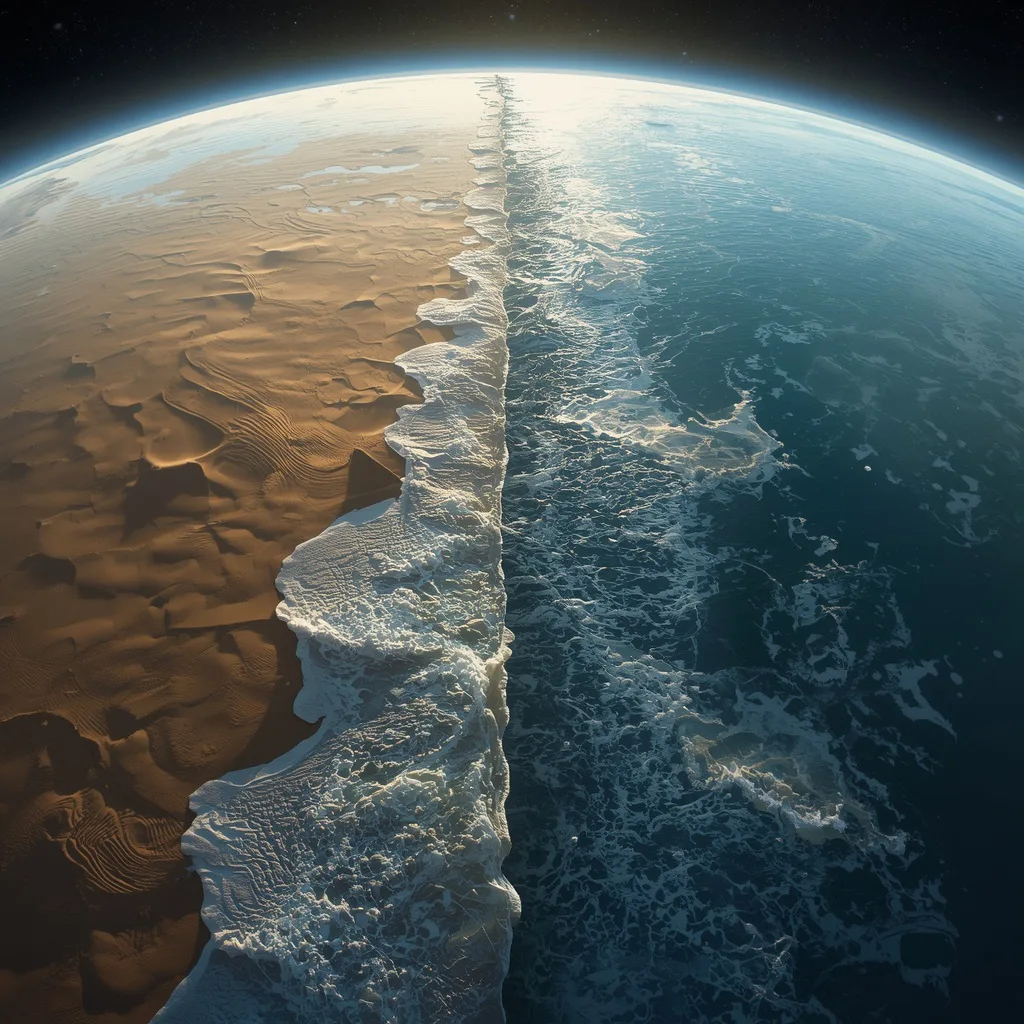
A planetary landscape where desert and ocean continuously merge into each other forming hybrid sand-water cycles. Waves transform into dunes and dunes dissolve back into liquid oceans. The sky reflects both states simultaneously. Energy flows connect all transitions creating a living planetary system. Ultra cinematic cosmic realism, 8K ultra detail, no text.
What this prompt creates
A planet where desert and ocean merge into hybrid sand-water cycles. Waves become dunes and dunes dissolve into oceans, with energy flows connecting transitions. Ultra-cinematic cosmic realism in 8K.
- Best model
- Leonardo AI
Tips for this prompt
- Add a binary star system in the sky to cast dual shadows and enhance the cosmic feel.
Prompt 8Deep Earth Magma Energy Civilization With Controlled Thermal Core Extraction System
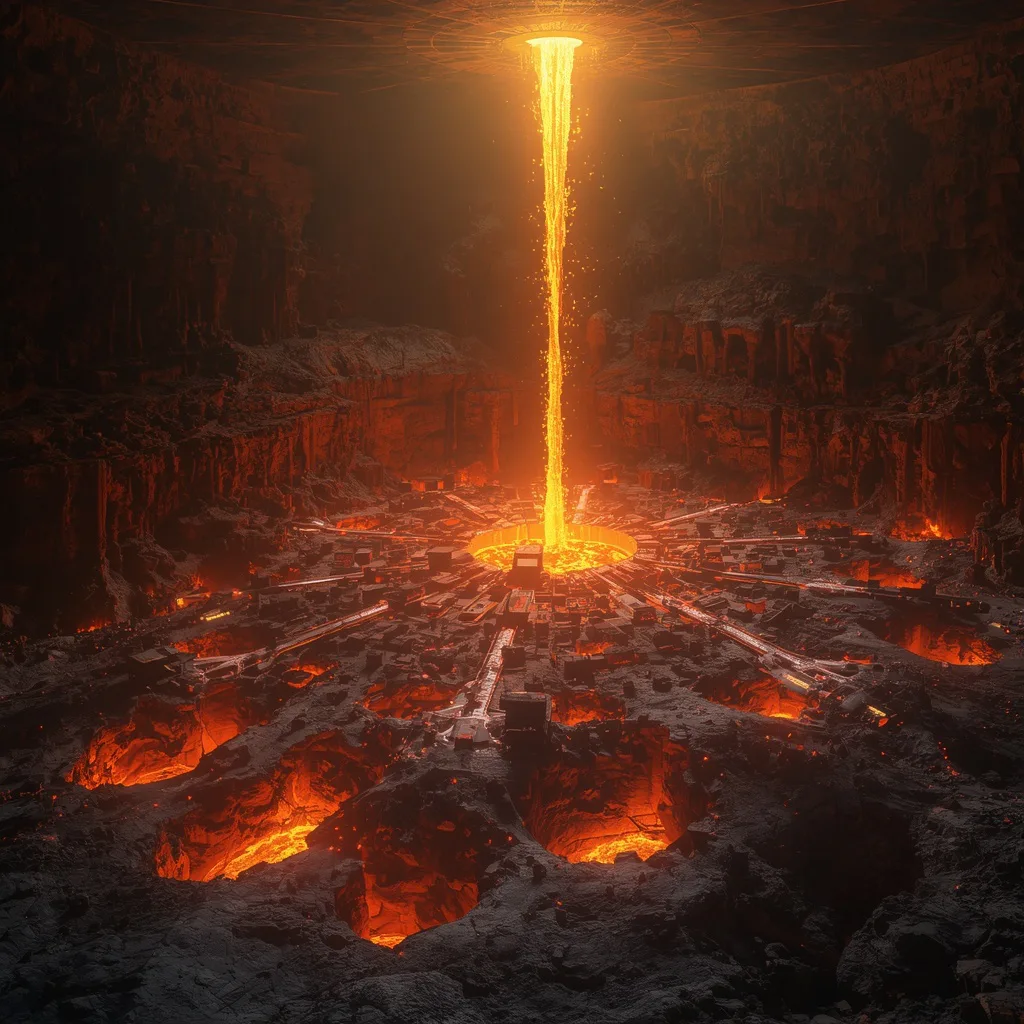
A subterranean civilization powered by controlled extraction of geothermal and magma energy from Earth’s deep core layers. Advanced stabilization fields manage extreme heat and pressure to safely harness massive energy output. Cities are built around thermal cores that glow with controlled energy flows. The system maintains geological balance while supporting advanced civilization infrastructure. Ultra detailed 8K visualization showing molten Earth layers, deep energy systems, and underground civilization engineering.
What this prompt creates
A subterranean civilization harnesses geothermal and magma energy with advanced stabilization fields. Cities glow around thermal cores in ultra-detailed 8K. Maintains geological balance while powering infrastructure.
- Best model
- Midjourney
Tips for this prompt
- Show a cross-section of the crust to reveal the thermal extraction machinery and energy flows.
Prompt 9Floating Multi Gravity Architecture Fields With Vertical City Layer Rotation System
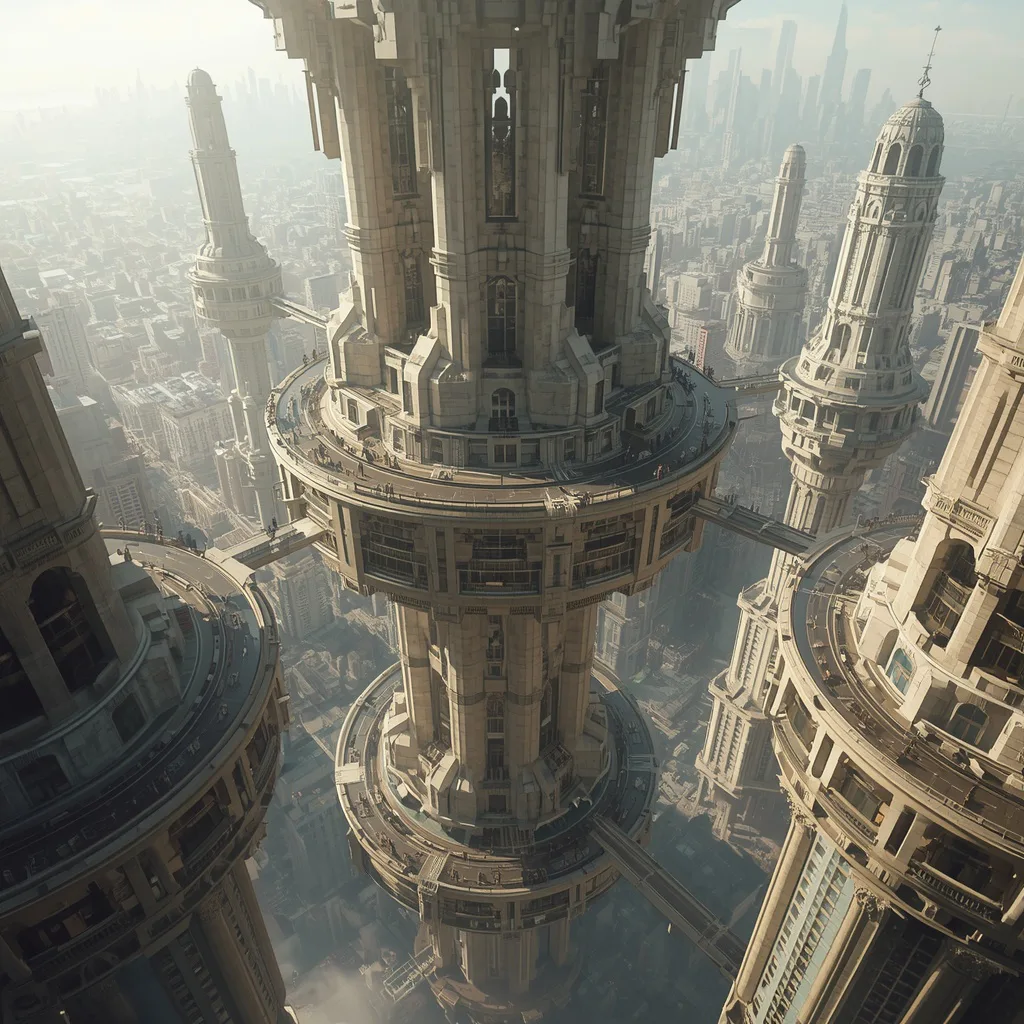
A surreal megacity where gravity changes direction across different vertical layers, causing buildings to rotate slowly in space. Streets exist on vertical surfaces while people move seamlessly across gravity shifts. Entire districts float and rotate independently. The environment feels complex, engineered, and visually impossible. Ultra cinematic sci-fi world, 8K, no text.
What this prompt creates
A surreal megacity where gravity shifts across vertical layers, causing buildings to rotate slowly. Streets on vertical surfaces, people move seamlessly. Ultra-cinematic sci-fi world in 8K.
- Best model
- ChatGPT
Tips for this prompt
- Add floating vehicles that navigate between gravity layers to emphasize the engineered complexity.
Prompt 10Post Apocalyptic Neon Desert City Reclaimed By Digital Sand Intelligence Systems
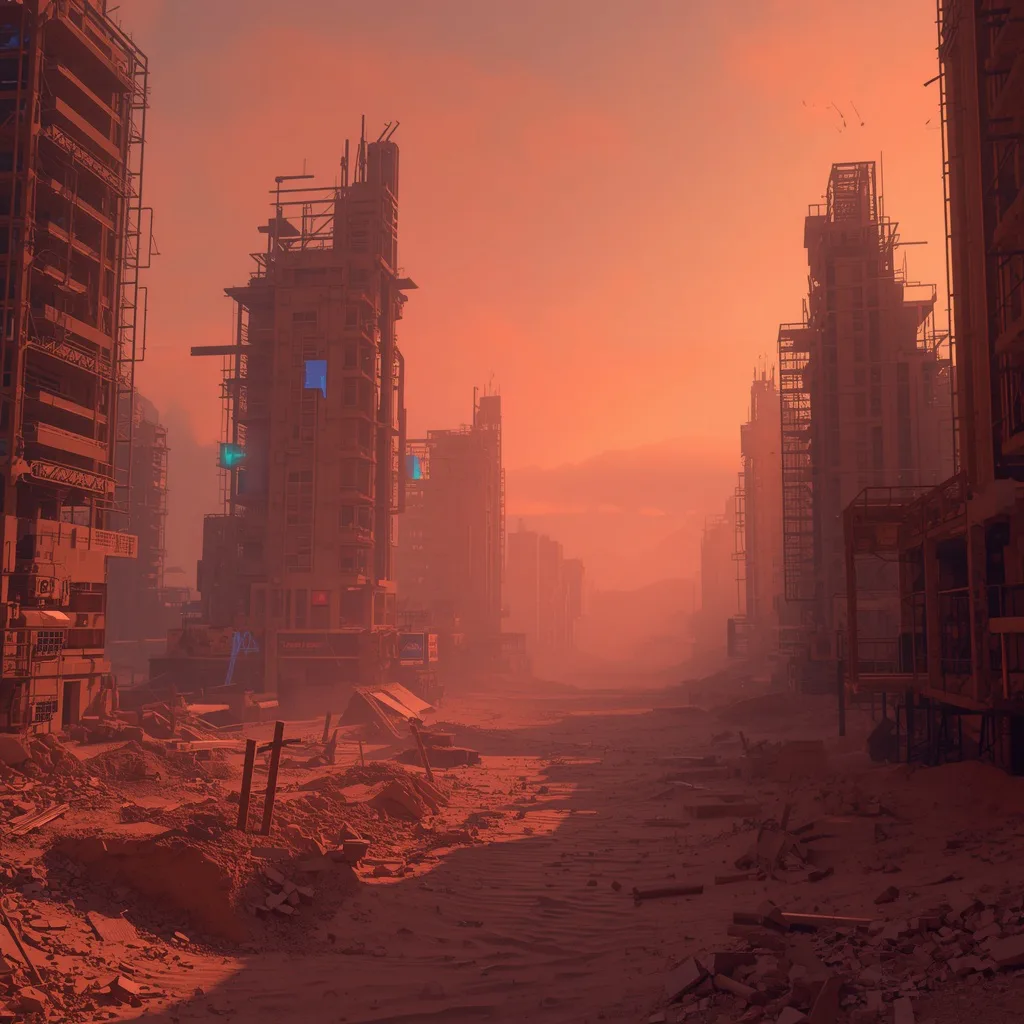
A ruined futuristic desert city where neon structures are slowly being absorbed by intelligent digital sand systems. Sand behaves like living code rewriting buildings over time. Broken skyscrapers emit fading holographic signals. The environment feels both decayed and evolving simultaneously. Ultra cinematic dystopian realism, 8K ultra detail, no text.
What this prompt creates
A ruined desert city where neon structures are absorbed by intelligent digital sand. Sand rewrites buildings like living code, broken skyscrapers emit fading holograms. Ultra-cinematic dystopian realism in 8K.
- Best model
- Flux
Tips for this prompt
- Introduce a lone scavenger figure to provide scale and a focal point amidst the digital sand.
How to use these prompts
- Choose a prompt that matches your desired mood, from cosmic to dystopian.
- Copy the prompt text exactly into your chosen AI image tool.
- Add style modifiers like 'cinematic lighting' or '8K ultra detail' if not already present.
- Generate multiple variations to explore different compositions.
- Use the customize tip to tweak colors, props, or elements for uniqueness.
- Upscale your favorite result for higher resolution and detail.
- Save and organize your images with descriptive filenames.
Pro tips for better results
- For neon-lit rainy scenes, specify 'wet reflective surfaces' and 'volumetric fog' to enhance atmosphere.
- Use 'hyperrealistic' and 'cinematic' to push for photorealistic results in sci-fi prompts.
- When using Midjourney, add '--ar 16:9' for widescreen cinematic compositions.
- In Flux, include '8K ultra detail' to maximize texture and clarity.
- For abstract prompts like the black void, use 'minimal' and 'no text' to avoid clutter.
- Experiment with negative prompts like 'no people' for environments where focus is on structures.
- Combine two prompts conceptually to create unique hybrid scenes, like neon jungle with magma energy.
Frequently asked questions
What makes neon-lit rainy AI prompts so popular in 2026?
Neon-lit rainy scenes combine cyberpunk aesthetics with atmospheric reflections, creating visually striking images. The contrast between glowing neon and wet surfaces adds depth and mood, making them ideal for sci-fi and urban fantasy art. AI tools now handle these complex lighting effects with impressive realism.
Which AI tool is best for generating neon-lit rainy cityscapes?
Midjourney and Flux excel at neon-lit rainy scenes due to their strong lighting and texture rendering. Midjourney offers cinematic compositions, while Flux provides ultra-realistic 8K details. Leonardo AI is great for stylized versions. Experiment to see which matches your vision.
How can I make my neon-lit rainy prompts more unique?
Add unexpected elements like floating vehicles, digital sand, or bio-luminescent plants. Combine themes, such as 'neon jungle underground metro' or 'post-apocalyptic neon desert'. Use customize tips to tweak colors, props, and weather effects for a fresh take.
Do I need to include '8K ultra detail' in every prompt?
Not necessarily, but it helps push for higher resolution and finer details. For abstract or minimal prompts, '8K' may be less critical. Focus on style keywords like 'cinematic' and 'hyperrealistic' to guide the AI effectively.
Can I use these prompts for commercial projects?
Yes, but check your AI tool's licensing terms. Most platforms allow commercial use of generated images, but some restrict it based on subscription. Always review the terms to ensure compliance before using images in products or marketing.
Conclusion
These ten prompts give you a full night-time toolkit, from a neon jungle metro with living tunnel ecosystem to a post-apocalyptic desert city reclaimed by digital sand intelligence. Pick the one that matches the base photo already on your drive, copy it exactly, and change only the lighting and colour words on your first pass. That single habit will teach you more than reading ten tutorials. Keep your notes short, keep your palette narrow, and let the rain and neon do the rest. When you are ready, copy one prompt from this post and run it tonight. The neon-lit rainy ai prompts above are designed to be used, not admired, so choose one and make it yours.
Related hashtags
Related prompt collections